Mine subsidence
In short: Mine subsidence is ground movement after underground coal mining, as the land sinks into the mined-out workings. Around Newcastle and the Hunter, old bord and pillar workings are often shallow; many are considered stable, but parts occasionally collapse, usually affecting a single property. Building in a Mine Subsidence District generally needs Subsidence Advisory NSW approval, and approved structures can claim compensation for subsidence damage.
Key takeaways
- Bord and pillar mining was mainly used in the Hunter and Newcastle regions; collapses of these old workings are generally localised to one property.
- The NSW Planning Portal Spatial Viewer shows whether a property is in a Mine Subsidence District and which Surface Development Guideline applies.
- Councils and certifiers can approve designs complying with Guidelines 2, 3, 3A, 6 and 8; Guidelines 1, 1A, 4, 5 and 7 need Subsidence Advisory.
- Claims go to Subsidence Advisory NSW within 12 months of learning the damage was caused by subsidence. Structures built without approval may not be covered.
- Under Guideline 1, a structural engineer can design and certify a home to span and cantilever over a 5 m pothole.
Building, buying or seeing new cracks in a Mine Subsidence District? Get a quote or call 02 4091 1900, and send us the Surface Development Guideline shown for the property, plus any plans or photos.
What is mine subsidence, and why does it matter in Newcastle?
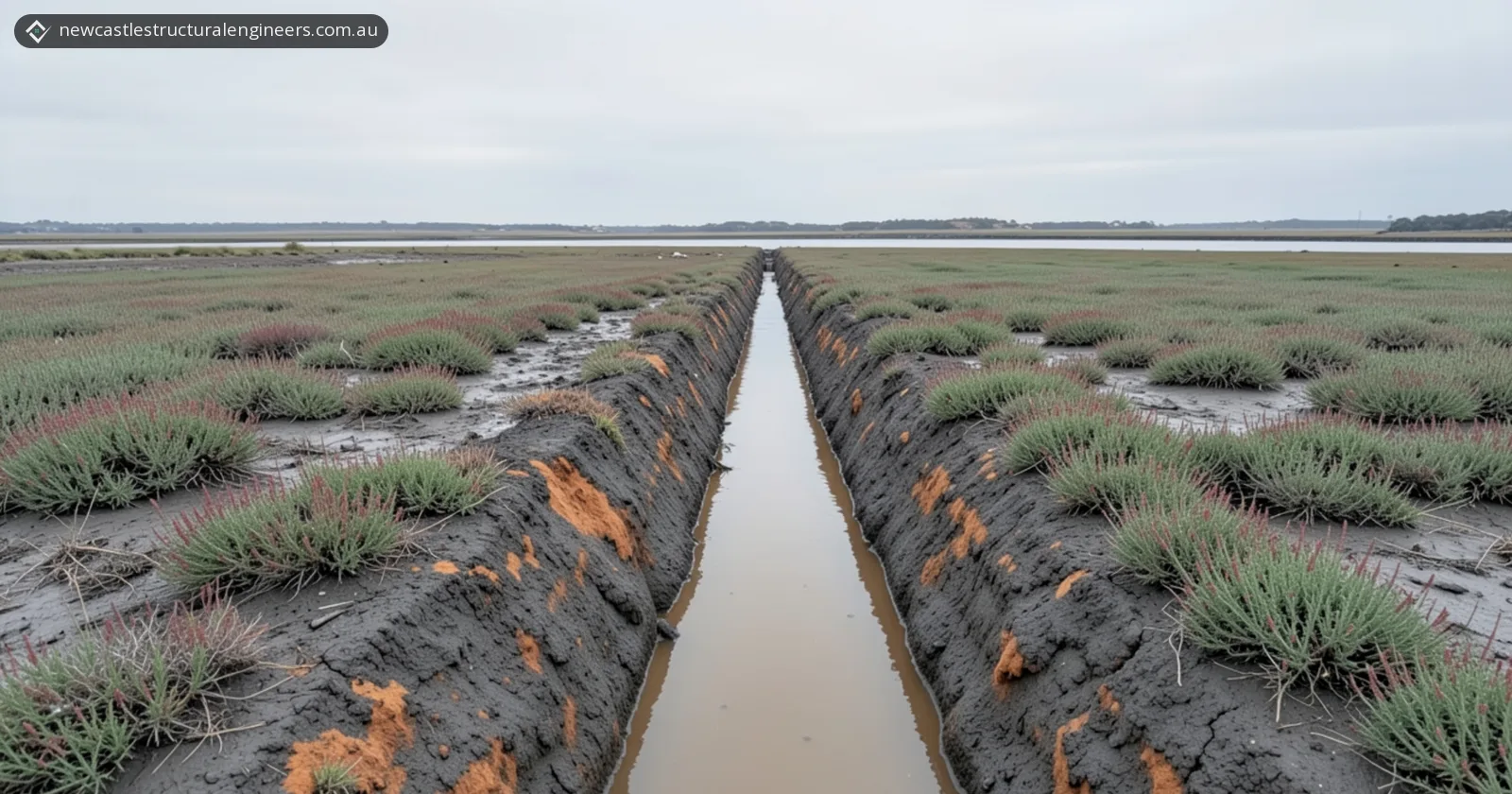
Mine subsidence is ground movement after underground coal mining, and it matters in Newcastle because parts of the city and Lake Macquarie sit over old coal workings. Subsidence Advisory NSW, the NSW Government agency that administers mine subsidence compensation and regulates development in districts, says bord and pillar mining was mainly used in the Hunter and Newcastle regions. Some of that coal may have been extracted over 150 years ago.
The City of Newcastle's Development Control Plan (DCP) says parts of its area have been subject to underground coal mine workings or sit within their zone of influence. Lake Macquarie City Council describes Charlestown, Cardiff, Morisset, Glendale and West Wallsend as extensively undermined.
| Old bord and pillar workings (non-active) | Longwall mining (active) | |
|---|---|---|
| Depth | Often shallow | Generally more than 200 m below ground in NSW |
| When subsidence happens | Occasionally, when parts of the workings collapse; factors such as water inundation can make them deteriorate over a long time | A short time after mining; in most cases the ground completely settles within 2 to 5 years |
| Area affected | Generally localised, typically a single property | Gradual, over a large area |
| Subsidence holes (potholes) | Possible where workings are very shallow | No risk at that depth, says Subsidence Advisory |
How does mine subsidence damage a house?
Mine subsidence usually damages a house through tilts, strains and curvature in the ground, rather than the drop itself. Subsidence Advisory says a building directly above collapsed workings may escape damage if it subsides evenly, while buildings on or near the edge of subsided ground may be damaged.
| Ground movement | What it is | What it can do to a house |
|---|---|---|
| Tensile strain | The ground surface lengthening between two points | Cracks in brickwork and internal walls; paving joints separating |
| Compressive strain | The ground surface shortening between two points | Brickwork breaking apart, door and window openings shrinking, pipes and paving buckling |
| Tilt | A change in ground slope between two points | Jammed doors and windows; generally a problem only if a significant tilt remains once subsidence is complete |
| Curvature | The rate of change of tilt, upward (hogging) or downward (sagging) | Differential settlement across the building |
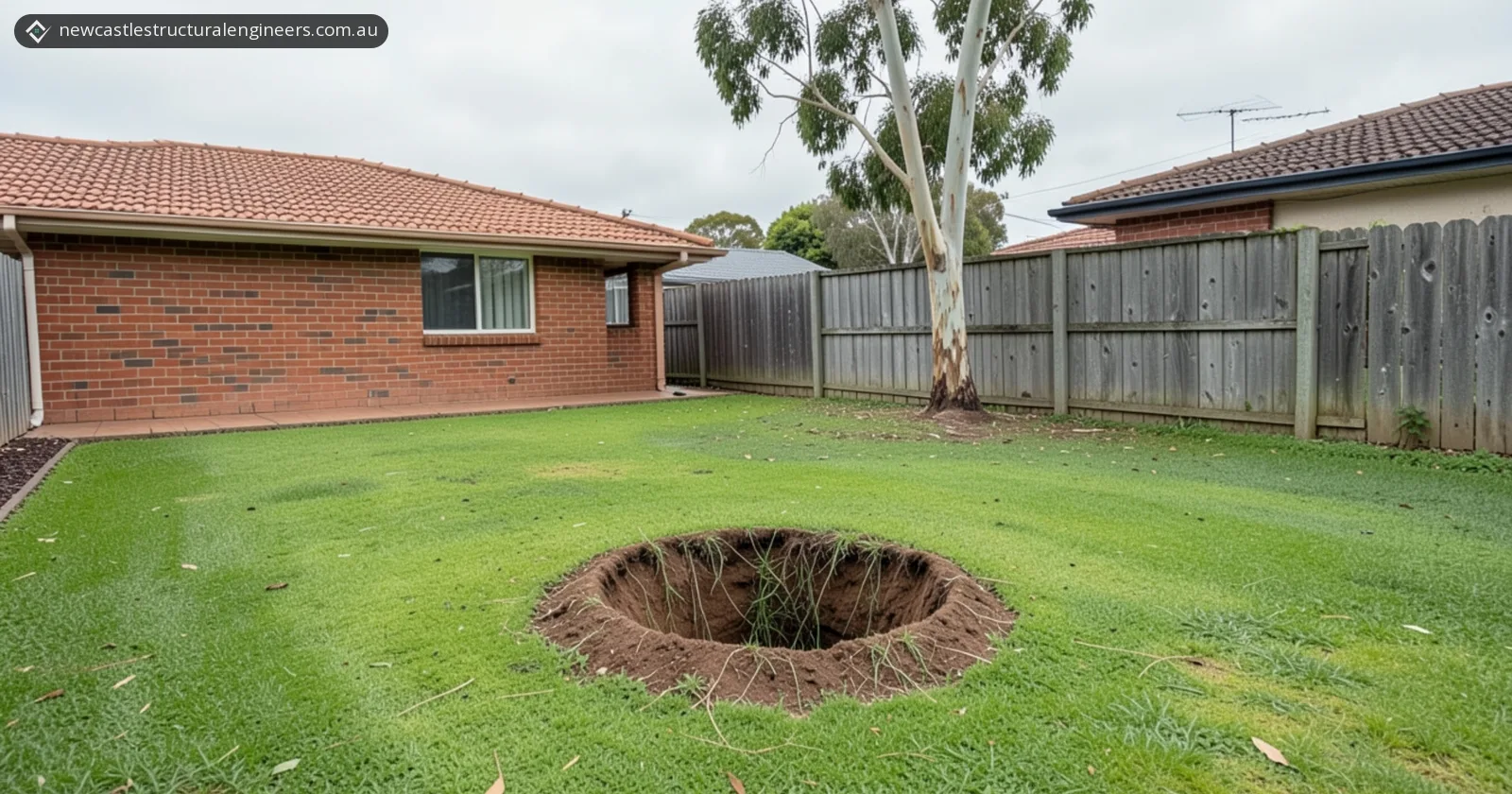
| Subsidence hole | A hole where very shallow old workings collapse | Generally localised; most in developed areas are less than 5 m across |
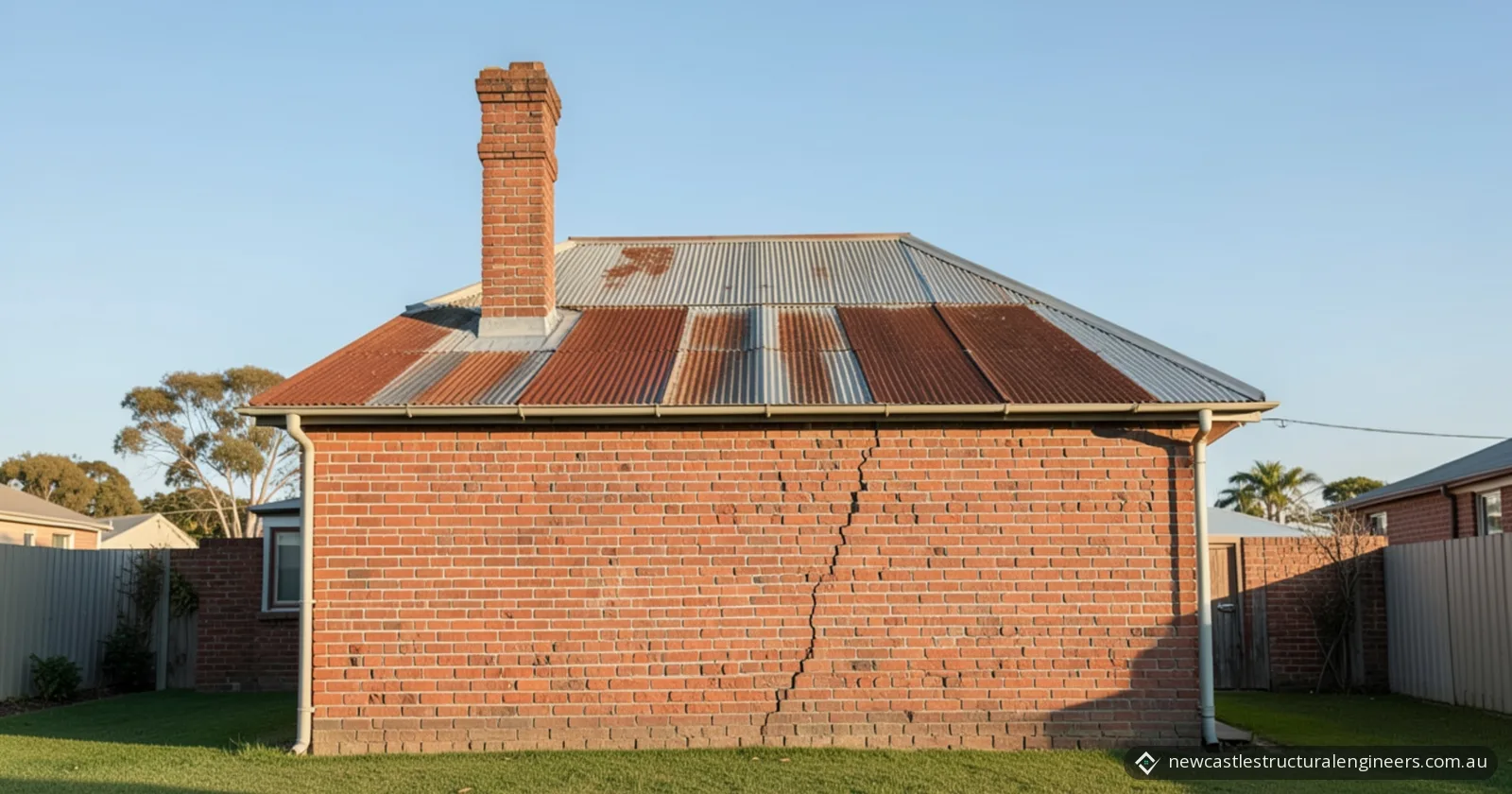
Inside, mine subsidence cracks are often near cornices and door and window frames; outside, subsidence can crack brickwork in a diagonal or stepped pattern. Subsidence Advisory warns that reactive soils, tree roots and poor building practice can also damage homes.
Is my property in a Mine Subsidence District?
You can check by searching the address, or its Lot/Section/DP (deposited plan) details, on the NSW Planning Portal Spatial Viewer, which also shows the Surface Development Guideline assigned to the property. Subsidence Advisory declares districts where planned, active or non-active underground coal mining poses a potential subsidence risk to development.
Subsidence Advisory's map of all 30 districts shows a chain of them from Muswellbrook and Singleton through Maitland and Cessnock to Newcastle and Lake Macquarie. Districts around Newcastle and Lake Macquarie include Newcastle, Killingworth-Wallsend, Lake Macquarie, Lake Macquarie No 1 Extension, West Lake, Mandalong, Swansea Heads and Swansea North Entrance.
Neighbouring properties in one district can have different guidelines, because one may be mined beneath and the next may not.
What do the Surface Development Guidelines require?
Each guideline sets what can be built, based on the type of mining and predicted subsidence, and who can approve a design that complies:
| Guideline | Assigned where | A complying design generally accommodates | Who can approve it |
|---|---|---|---|
| 1 | Shallow old workings, high or moderate pothole risk | A 5 m pothole (engineered option) | Subsidence Advisory |
| 1A | Shallow old workings, reduced pothole risk | A 3 m pothole (engineered option) | Subsidence Advisory |
| 2 | Trough subsidence risk from unstable old workings | Strain 2 mm/m, tilt 4 mm/m | Council, certifier or Subsidence Advisory |
| 3 | Remote risk from abandoned workings | Not specified; up to four storeys | Council, certifier or Subsidence Advisory |
| 3A | Remote or very low residual risk, such as above past longwall mining | Strain 1 mm/m, tilt 1 mm/m | Council, certifier or Subsidence Advisory |
| 4 | Likely to be undermined in future | Strain 5 mm/m, tilt 7 mm/m | Subsidence Advisory |
| 5 | Likely to be undermined, moderate movements | Strain 3 mm/m, tilt 7 mm/m | Subsidence Advisory |
| 6 | Likely to be undermined in future | Strain 2 mm/m, tilt 4 mm/m | Council, certifier or Subsidence Advisory |
| 7 | Unknown or severe subsidence, or shallow mine entries or shafts | Assessed on merit | Subsidence Advisory |
| 8 | Not undermined; future mining not likely | No restrictions | Council, certifier or Subsidence Advisory |
Guideline 2, for example, allows up to two single or two storey brick veneer homes, each up to 24 m long and 400 m² in footprint, and prohibits basements, integral retaining walls supporting the building, masonry internal walls and suspended, drop edge or stepped slabs.
Do I need approval to build in a Mine Subsidence District?
Yes: building, extending or subdividing in a district needs Subsidence Advisory approval before work starts, unless the work is on its exempt development list. Exempt examples include carports up to 50 m² (except on Guideline 7 land) and retaining walls up to 1 m high.
Plans are prepared to the property's guideline, as a full set of site, floor and elevation drawings. They are lodged with council or a certifier where the guideline allows, or with Subsidence Advisory through its portal or as integrated development through council. Subsidence Advisory approves guideline-compliant applications within 7 calendar days. Designs that exceed the guideline go to a merit assessment, generally decided within 40 calendar days, and may need desktop geotechnical studies or borehole investigations.
Subsidence Advisory says its requirements for standard residential development, in most cases, do not increase construction costs and are consistent with the National Construction Code.
What are the mine subsidence rules in Newcastle and Lake Macquarie?
In Newcastle and Lake Macquarie, Subsidence Advisory's approval sits alongside council approval. Section 4.46 of the Environmental Planning and Assessment Act 1979 makes development in a district, other than exempt development, integrated development, and section 4.47(2) requires councils to refer it to Subsidence Advisory. Designs that comply with Guideline 2, 3, 3A, 6 or 8 can instead be approved by council or a registered certifier without referral.
- City of Newcastle: Section B3 of the DCP says mine subsidence must be considered in preliminary design, and Subsidence Advisory approval is sought before a development application (DA) is lodged. Where Subsidence Advisory requires plans, its stamped plans go in with the DA, and drawings must carry notes confirming compliance with the guideline.
- Lake Macquarie: Subsidence Advisory says some large and complex developments over old workings may be required to grout them. In May 2024, Lake Macquarie City Council reported a $10 million federal Lake Macquarie Mines Grouting Fund to help fill disused mine voids under prime commercial land with a pumped, cement-like material.
How do mine subsidence claims work?
Mine subsidence claims are lodged with Subsidence Advisory NSW under the Coal Mine Subsidence Compensation Act 2017, online, by email or by post. Only improvements that met its development approval requirements can be claimed, although the Act allows discretion where the missing approval was not the owner's fault or exceptional circumstances exist.
For old (non-active) workings, the Approved Procedure of 1 July 2025 sets these steps:
| Stage | What happens | Timeframe |
|---|---|---|
| Lodge | Property details, a description and photos of the damage | Within 12 months of the owner learning the damage was caused by subsidence |
| Preliminary assessment | A desktop check of ownership, approvals and mining records; properties more than 2 km from recorded workings don't progress | Within 21 days of lodging |
| Inspection and assessment | The assessor may survey floor levels, inspect underfloor and check the footings; mine subsidence damage is costed on a like-for-like basis | Inspection scheduled within 28 days of lodging, or of the claim coming off hold; outcome within 120 days of the inspection |
| Review | An optional no-cost review of the outcome | Requested within 30 days |
| Payment | Compensation paid to the owner's nominated account; a signed deed of release is needed where compensation is over $10,000 | Within 30 days of the deed being executed |
Claims are put on hold while the ground is still moving. A disallowed claim can go to the Secretary of the Department of Customer Service for independent review within 90 days of the decision, then to the Land and Environment Court. In active mining areas, the mining company pays accepted claims, and since 1 July 2025 pre-mining inspections are mandatory in designated zones, such as the Wyee zone for Longwall 40 at Mandalong mine.
What does a structural engineer do for mine subsidence?
A structural engineer designs new work to suit the property's guideline or a merit assessment, certifies it where Subsidence Advisory requires, and inspects damage.
- Guideline 1 designs. Instead of the standard strip footings, Guideline 1 lets a qualified structural engineer design a house to span and cantilever over a 5 m pothole anywhere beneath it, certifying that damage would be limited to slight damage under the damage classification in Australian Standard AS 2870. A Subsidence Advisory officer inspects the footing reinforcement before concrete is placed.
- Merit assessments. In historical mining areas, Subsidence Advisory's Merit Assessment Policy requires an engineer's certification form where the estimated subsidence impact is greater than 2 mm/m strain or 2 mm/m tilt, or a radius of curvature tighter than 5 km. The form covers measures such as slabs on one level over sand bedding and plastic membranes, footings separated from the superstructure, articulation joints at openings, flexible pipe joints and steeper falls in wet areas and gutters.
- Damage. An inspection records cracks and floor levels and considers other causes. Subsidence Advisory assesses claims with its own assessors or consultants, and says it cannot reimburse reports owners obtain themselves.
When to call a structural engineer
Call a structural engineer before designing anything beyond exempt work in a Mine Subsidence District, and when damage needs explaining:
- planning a new home, extension or granny flat, especially on Guideline 1, 1A or 7 land, or a design that exceeds the guideline;
- Subsidence Advisory or council asks for an engineer's design or certification;
- buying in a district and wanting the structure checked;
- new cracks, jammed doors or sloping floors, before or alongside a claim.
Our structural design service covers drawings for new homes, extensions and renovations. Our structural inspections include pre-purchase and general building inspections, and reports and certifications cover sign-off of completed structural work. To get a quote, send your suburb, the property's guideline from the Spatial Viewer, and any plans or photos.
Frequently asked questions
Does the Spatial Viewer show the old mine workings under my house?
Only in general terms. Its Underground Coal Mining Area layer shows where coal has been extracted, with a buffer zone because old workings may sit slightly away from where survey plans show them. Subsidence Advisory says the layer must not be used for risk assessment, does not show planned mining, and that mine survey plans are generally not available to the public.
Can I claim if my house is outside a Mine Subsidence District?
Yes. Subsidence Advisory says all homes and buildings in NSW, inside or outside a declared district, are eligible for compensation if damaged by mine subsidence, provided the correct development approvals were obtained.
What should I check before buying a house in a Mine Subsidence District?
Ask through your conveyancer or the seller whether the structures have the correct approvals and whether a claim was lodged: Subsidence Advisory keeps no public register of claim history. Owners who accept a claim are generally required to sign a deed that makes them disclose to buyers any compensated damage that has not been repaired. Under the Coal Mine Subsidence Compensation Act 2017, buyers may withdraw from a contract of sale for a structure that does not comply with Subsidence Advisory's development requirements.
Can I renovate inside my house without Subsidence Advisory approval?
Usually, yes. Its exempt development list covers steel or timber framed internal alterations, such as doors, windows, ceilings, kitchens, en-suites, toilets and internal partitions, provided there are no structural alterations.
What should I do if a hole opens up in my yard?
Keep away and call Subsidence Advisory's 24-hour emergency hotline on 1800 248 083, or Triple Zero (000) if life or property is under immediate threat. The ground around a subsidence hole may be unstable, and the hole can contain hazardous gases from old mines.
Sources
- Subsidence Advisory NSW: What is mine subsidence?
- Subsidence Advisory NSW: About Subsidence Advisory NSW
- Subsidence Advisory NSW: Safety and subsidence emergencies
- Subsidence Advisory NSW: Mine Subsidence Districts
- Subsidence Advisory NSW: Mine Subsidence Districts map, all districts
- Subsidence Advisory NSW: Development approval process
- Subsidence Advisory NSW: Exempt Development List (April 2023)
- Subsidence Advisory NSW: Surface Development Guideline 1
- Subsidence Advisory NSW: Surface Development Guideline 1A
- Subsidence Advisory NSW: Surface Development Guideline 2
- Subsidence Advisory NSW: Surface Development Guideline 3
- Subsidence Advisory NSW: Surface Development Guideline 3A
- Subsidence Advisory NSW: Surface Development Guideline 4
- Subsidence Advisory NSW: Surface Development Guideline 5
- Subsidence Advisory NSW: Surface Development Guideline 6
- Subsidence Advisory NSW: Surface Development Guideline 7
- Subsidence Advisory NSW: Surface Development Guideline 8
- Subsidence Advisory NSW: Development Application, Merit Assessment Policy (April 2023)
- Subsidence Advisory NSW: Mine subsidence design structural engineer certification form (Attachment F)
- Subsidence Advisory NSW: Claiming for mine subsidence damage
- Subsidence Advisory NSW: Claiming compensation in non-active mining areas
- Subsidence Advisory NSW: Approved Procedure, Claiming in non-active mining areas (1 July 2025)
- Subsidence Advisory NSW: Claiming compensation in active mining areas
- Subsidence Advisory NSW: Pre-mining inspections
- Subsidence Advisory NSW: Properties in Mine Subsidence Districts
- City of Newcastle: Development Control Plan, Section B3 Mine subsidence
- Lake Macquarie City Council: Grouting fund lays groundwork for Lake Mac development (May 2024)